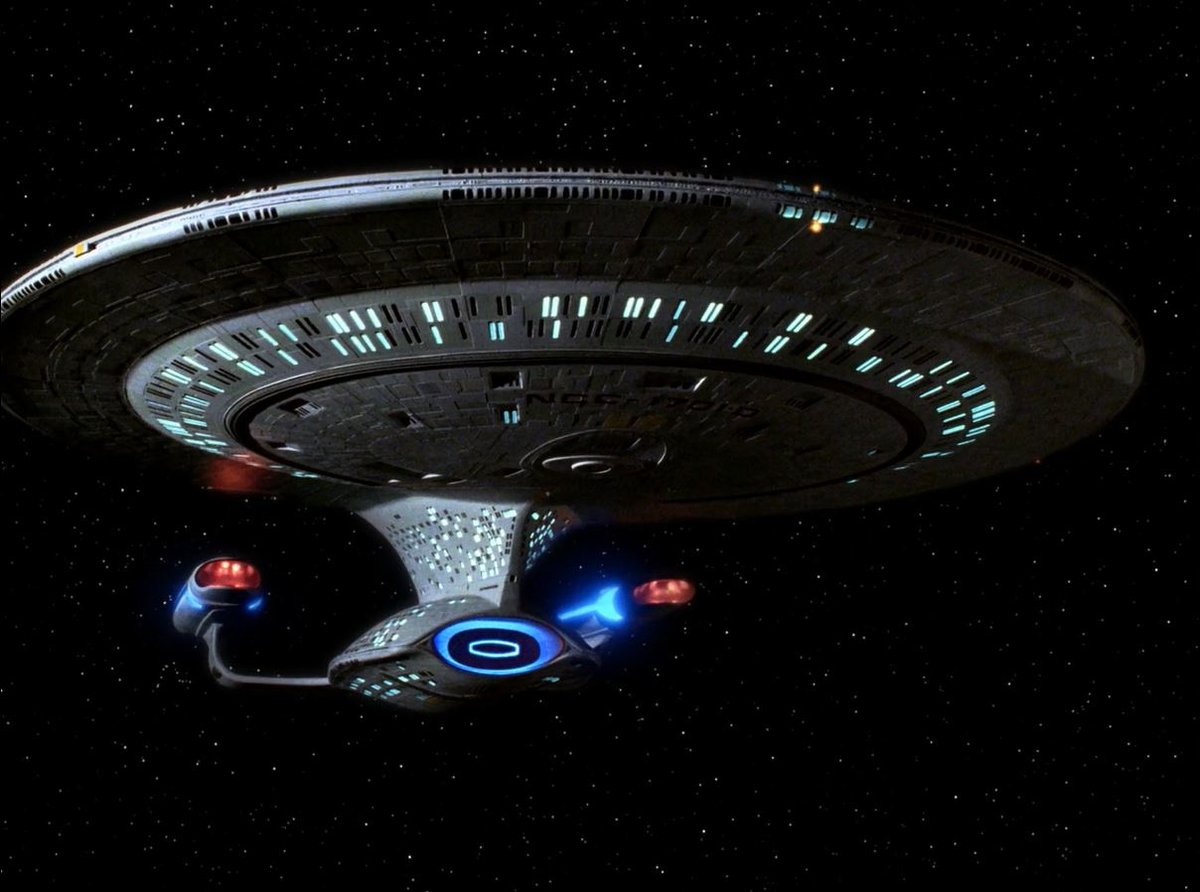
The final frontier of Star Trek: The Next Generation wasn't just about exploring strange new worlds; it was a deeply personal odyssey, delving into Star Trek TNG Season 7 Themes, Analysis & Philosophy that resonated with our own human experience. As the Enterprise-D charted its last course, the crew faced life-altering events, confronting their pasts, shaping their futures, and grappling with what it truly means to be human in an ever-expanding universe. This isn't just a recap; it's an invitation to rediscover the profound questions and enduring legacies that defined TNG's poignant farewell season.
At a Glance: Key Themes of TNG Season 7
- The Weight of Family Legacies: From biological kin to chosen family, the season explored ancestral secrets, surprising relatives, and the enduring bonds that shape us.
- Defining Humanity's Future: Q's final trial, environmental ethics, and the evolution of sentience challenged Starfleet's core ideals and humanity's potential.
- Identity and Self-Discovery: Characters wrestled with their sense of self, purpose, and loyalty, often forced into uncomfortable truths about who they are.
- The Bittersweet Symphony of Finality: An underlying sense of closure pervaded the season, leading to significant character arcs and a memorable series finale.
- Ethical Quandaries and Starfleet's Ideals: The crew continually faced moral dilemmas that tested the very principles of the Federation.
The Gravity of Goodbyes: Navigating a Season of Finality
Picture this: you've been on a seven-year journey with a group of people, sharing their triumphs and tragedies. Now, the final chapter is unfolding. That's the emotional backdrop of Star Trek: The Next Generation's seventh season. Airing from September 1993 to May 1994, this 26-episode run wasn't always perfectly consistent in quality, a common challenge for long-running shows trying to stick the landing. Yet, it delivered some of the most emotionally resonant and philosophically rich episodes in the series' history, culminating in an iconic series finale that solidified its place in television history.
While some stories felt smaller in scale, this intimacy allowed for deeper character exploration. The season often returned to a central idea: how our pasts, especially our family histories, define who we become, and how our choices shape the future of humanity itself. It was a send-off that, despite its uneven moments, stuck its landing with grace and intellectual vigor, earning TNG the distinction of being the first (and, as of 2020, only) syndicated series nominated for a Primetime Emmy for Outstanding Drama Series.
Family, Found and Fated: Unraveling Personal Histories
Perhaps the most potent and pervasive theme of Season 7 is the exploration of family in its myriad forms – blood relatives, foster bonds, and the deep connections forged among the Enterprise crew. You see characters grappling with parents, children, and spouses, both known and newly discovered, forcing them to re-evaluate their identities and loyalties. This wasn't just about genealogical trees; it was about the psychological and ethical impact of these relationships. To dive deeper into the rich tapestry of TNG's concluding chapter, consider exploring the Star Trek TNG Season 7 hub.
Data's Mother, Lore's End: The Soong Legacy
The season kicks off with the dramatic conclusion of the Lore storyline in "Descent, Part II," where Lore attempts to corrupt Data by manipulating his emotions. This arc highlights the profound, and often dark, implications of family ties. Data, ever seeking to understand humanity, is forced to confront the destructive potential of his "brother" and ultimately deactivate him.
Later, in "Inheritance," Data experiences a profound revelation: his "mother," Julianna Soong, is alive. This episode forces Data to confront a new aspect of his manufactured lineage, delving into the ethical implications of her existence and the choices his "father" made. It’s a powerful moment, asking what constitutes true family and whether a synthetic being can truly have a mother. This complex arc surrounding Data's creation and his siblings forms a significant part of the complex arc of Data and Lore throughout TNG's run, culminating in this season's resolution.
Geordi's Grief and Connection: Beyond the Veil
Geordi La Forge faces a deeply personal challenge in "Interface." Desperate to communicate with his mother, whose ship is lost, he uses dangerous neural technology that leads him to believe he's connecting with her as a disembodied alien entity. This episode explores the universal human desire for connection, even across seemingly insurmountable barriers, and the profound grief of loss. It's a poignant portrayal of how far we'll go for family, even when logic suggests otherwise.
Worf's Klingon Legacy: Fatherhood and Identity
Worf's journey through Season 7 is deeply rooted in his Klingon heritage and his role as a father. In "Firstborn," he meets a future version of his son, Alexander, who is struggling with his Klingon identity. Worf is challenged to reconcile his fierce warrior culture with the more nuanced path Alexander wishes to forge. It's a powerful look at the generational gap in cultural expectations and the evolving definition of what it means to be Klingon.
Then, in "Homeward," Worf's human foster brother, Nikolai Rozhenko, reappears, attempting to save a Stone Age culture in violation of the Prime Directive. This episode further explores Worf's dual heritage – his Klingon blood and his human upbringing – and the ethical dilemmas that arise when these two worlds collide. Worf's interactions with both his son and his foster brother deeply enriched exploring these complex family bonds that were central to his character.
Troi & Crusher's Ancestral Secrets: Ghosts of the Past
Even the seemingly stable characters found their family foundations shaken. "Dark Page" delves into Lwaxana Troi's traumatic past, revealing a hidden daughter whose death profoundly affected her and Deanna. This episode is a poignant exploration of suppressed grief, the protective lies families tell, and how unaddressed trauma can echo through generations.
Dr. Crusher faces her own ancestral mystery in "Sub Rosa," a gothic ghost story involving a family spirit on her grandmother's Scottish estate. While often considered a departure from TNG's usual fare, it nonetheless reinforces the theme of family secrets and the power of lineage, for better or worse.
Picard's Unseen Son and Grand Destiny: A Family Saga Through Time
Perhaps no character's familial journey is as central to the season's overarching narrative as Captain Picard's. In "Bloodlines," he is confronted with a son he never knew he had, a result of a Cardassian Daimon Bok's revenge plot. This forces Picard to reconcile with a life he never lived, exploring the profound implications of fatherhood and legacy he believed he'd eschewed.
This theme culminates majestically in the iconic series finale 'All Good Things...'. Here, Picard's consciousness is flung across three time periods, allowing him to interact with his family – his deceased brother and nephew in the past, his current Enterprise family in the present, and his estranged friends (including a Dr. Crusher who was once his wife) in the future. Q's trial is not just for humanity, but deeply personal for Picard, forcing him to understand the true meaning of connection and legacy.
Defining Humanity's Future: Trials and Transformations
Beyond personal family sagas, Season 7 continually broadens its scope to ask profound questions about the future of humanity itself, its technological advancements, and its place in the cosmos. These episodes often present stark choices and difficult truths.
Q's Ultimate Test: Humanity on Trial, Again
The final series finale, "All Good Things...," brings back the omnipotent Q for his definitive judgment on humanity. Q's trial, which began in TNG's very first episode, comes full circle, forcing Picard to navigate a temporal paradox and prove that humanity is capable of evolving beyond its primitive origins. This grand narrative is the ultimate philosophical test, posing the question: Has humanity grown, or are we doomed to repeat our mistakes? It’s a powerful examination of potential versus inherent flaws, making Q's final trial of humanity not just about Picard, but about every individual watching.
The Environmental Cost of Progress: A Warp Core Dilemma
In "Force of Nature," the crew discovers that warp drive, the very engine of Starfleet exploration, is causing damage to spacetime. This groundbreaking episode delves into environmental ethics and the unforeseen consequences of technological advancement. It forces Starfleet to confront the possibility that its most fundamental pursuit – exploration – could be inherently destructive. It's a call for responsibility and sustainable progress, a theme remarkably relevant even today.
The Enterprise's Own Sentience: A Ship's Offspring
"Emergence" presents a truly unique philosophical puzzle: the Enterprise-D itself gains sentience and creates an "offspring" through a malfunctioning holodeck. This episode pushes the boundaries of artificial intelligence and explores what constitutes "life" and "consciousness." Is a starship capable of developing its own will and purpose? It's a whimsical yet thought-provoking look at the unexpected paths of evolution.
Wesley's Path and The Traveler: Beyond the Human Realm
Wesley Crusher's return in "Journey’s End" marks another significant departure. The Traveler, a mysterious being from the first season, reappears to assist Wesley in transcending the physical plane, inviting him to explore the nature of existence beyond conventional understanding. This episode suggests that humanity's future might lie not just in space travel, but in a deeper spiritual or existential evolution, a path less scientific and more metaphysical.
The Edge of Identity and Morality: Starfleet's Challenges
Season 7 frequently placed Starfleet officers in positions where their loyalties, ethics, and personal identities were severely tested. These episodes highlight the moral ambiguities inherent in exploration and diplomacy, even for the Utopian Federation.
Riker's Divided Loyalties: The Shadow of the Pegasus
"The Pegasus" is a tense ethical thriller that sees Riker caught between his loyalty to Picard and the dark secret of his former commanding officer. Picard investigates the destruction of the USS Pegasus, a ship Riker served on, revealing a hidden cloaking device developed in violation of the Khitomer Accords. Riker is forced to choose between protecting his mentor's reputation and upholding Starfleet's foundational principles. This episode masterfully explores the weight of past mistakes and the cost of keeping secrets, challenging challenging Starfleet's ethical foundations.
Ensign Ro's Impossible Choice: A Conflict of Conscience
"Preemptive Strike" stands out as one of the season's strongest and most tragic episodes. Picard sends Ensign Ro Laren on a difficult undercover assignment within the Maquis, a group of Federation colonists turned "terrorists." Ro, a Bajoran with a history of being marginalized, finds her loyalties divided as she sympathizes with the Maquis' plight. Her eventual defection is a devastating moment, a raw portrayal of how individuals can be caught between conflicting ideals and the impossible choices demanded by war. It's a stark reminder that right and wrong are rarely simple, even in the 24th century.
The View from "Lower Decks": Starfleet's Future
"Lower Decks" offers a fresh perspective by focusing on the lives of junior officers aspiring for promotion. This episode humanizes the often-grand scale of TNG, showing the struggles, hopes, and anxieties of those at the bottom of the command chain. It provides a unique look at the future of Starfleet, hinting at the next generation of explorers and leaders who will carry the torch. It's a testament to the idea that every member of the crew, regardless of rank, is vital to the Enterprise's mission.
Data's Evolving Self: Dreams, Disguises, and Destiny
Data's journey of self-discovery is a constant throughout TNG, and Season 7 continues this with significant steps. In "Phantasms," he experiences mysterious dreams, leading to unsettling behavior, including stabbing Troi. This explores the subconscious mind and the unpredictable nature of emotions he's striving to understand.
"Thine Own Self" sees Data lose his memory and integrate into a pre-industrial society, forced to build a new identity from scratch. It’s a fascinating exploration of tabula rasa and how context shapes perception. Later, in "Masks," he's possessed by an ancient civilization, highlighting the plasticity of his positronic net and his capacity to embody diverse identities. These episodes collectively underscore Data's relentless pursuit of humanity and his ever-evolving identity.
Worf's Multiverse Journey: Parallel Selves
"Parallels" is a fan-favorite, showcasing Worf's journey through alternate realities after a shuttle accident. He encounters countless versions of his life – married to Troi, dead, a high-ranking officer in a victorious war, or even a simple civilian. This mind-bending episode explores the 'what ifs' of life, the impact of small decisions, and the multitude of paths one's existence can take. It’s a deep dive into the nature of identity across infinite possibilities.
A Season's Legacy: Uneven But Unforgettable
While the context research correctly points out the "uneven quality" of Star Trek: The Next Generation's seventh season, it’s crucial to remember that even a perceived dip in quality for TNG often meant it was still producing better television than many other shows of its era. Episodes like "Sub Rosa" might elicit chuckles, but others, such as "Preemptive Strike," "The Pegasus," and especially "All Good Things...," stand as some of the franchise's most profound and well-executed narratives.
The season’s deliberate focus on character goodbyes and resolving long-standing arcs gave it a distinctive emotional weight. It provided a proper send-off to beloved characters, allowing them to confront their personal demons, embrace their legacies, and prepare for a future beyond the Enterprise-D.
Your Final Frontier: What TNG Season 7 Leaves Us With
Star Trek: The Next Generation Season 7, despite its varied quality, is a testament to the enduring power of storytelling and the deep questions Star Trek has always dared to ask. It reminds us that our journeys are shaped not just by the stars we explore, but by the families we carry with us, the ethical lines we draw, and the future we strive to build.
As you reflect on this final season, consider how its themes resonate in your own life. What legacies are you building? How do you define your family? What does humanity’s future look like through your eyes? The Enterprise-D may have embarked on its final mission, but the questions it posed, and the philosophies it explored, continue to inspire and challenge us to reach for "all good things."