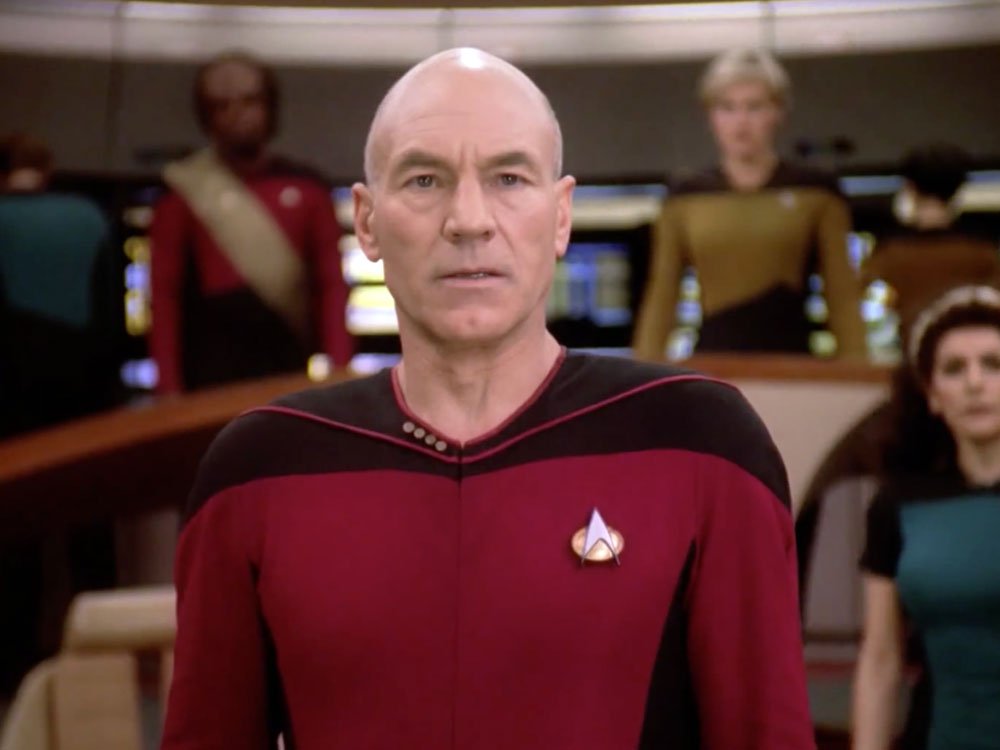
It's an emotional journey when a beloved series nears its end, and Star Trek: The Next Generation Season 7 was no exception. For fans and creators alike, this final run of episodes marked a pivotal moment, not just for the Enterprise-D crew, but for the future of the Star Trek universe itself. Diving into the Star Trek TNG Season 7 Production, Behind-the-Scenes & Trivia reveals a tapestry woven with creative ambition, bittersweet goodbyes, and an enduring legacy that continues to resonate decades later.
More than just a wrap-up, Season 7 was a deliberate exploration of themes that had defined the show: family, identity, and the very essence of what it means to be human in a vast, uncertain cosmos. Behind every warp jump and photon torpedo blast, there was a meticulous process of creation, fueled by dedication and boundless imagination, as seen in many the enduring legacy of TNG Season 7 behind-the-scenes accounts.
At a Glance: What Made TNG Season 7 Unique?
- A Thematic Deep Dive: The season leaned heavily into themes of family—both biological and chosen—identity, and legacy for almost every main character.
- Historic Emmy Nomination: It became the first (and, as of 2020, only) syndicated series ever nominated for a Primetime Emmy Award for Outstanding Drama Series.
- Bittersweet Farewell: The cast and crew grappled with the finality of their television run while preparing for the transition to feature films.
- Creative Pushing: Writers and producers had the freedom, and pressure, to bring long-running character arcs to satisfying conclusions.
- Behind-the-Scenes Camaraderie: The close-knit "family" atmosphere among the cast and crew was palpable, contributing to the show's consistent quality even in its final stretch.
The Weight of the Final Frontier: Setting the Scene for Season 7
By September 1993, Star Trek: The Next Generation had firmly established itself as a cultural phenomenon. Seven years of groundbreaking science fiction had cultivated a loyal fanbase and pushed the boundaries of syndicated television. But with success came a new challenge: how to conclude a beloved series while simultaneously launching a new chapter on the big screen.
Season 7, which commenced airing on September 20, 1993, and concluded on May 23, 1994, with 26 episodes, found itself in this unique position. It wasn't just wrapping up a season; it was wrapping up an era. The production team had to balance giving the television series a fitting send-off with laying groundwork for Star Trek Generations, the first TNG film. This delicate act required both foresight and a profound understanding of what made the show special to millions. If you're looking for Your guide to TNG Season 7 as a whole, understanding this context is key.
A Thematic Odyssey: Family, Loss, and Legacy
One of the most striking aspects of TNG Season 7's writing was its pervasive thematic focus on family and personal history. It felt like a conscious effort to bring the characters full circle, addressing lingering questions and providing emotional closure before their journey continued on film.
As noted by Wikipedia, "The season begins with the crew defeating Lore and his group of rogue Borg, resulting in the disassembly of Lore. It continued this theme of family history with most of the episodes." This setup immediately plunged Data into a personal quest, as he later confronts the realization that his "mother" is still alive in "Inheritance." This wasn't an isolated incident; nearly every main character faced a similar, deeply personal reckoning:
- Geordi La Forge grappled with profound loss in "Interface," attempting to save his mother from a damaged ship and confronting his grief.
- Worf faced the complexities of fatherhood and destiny, meeting a future version of his son, Alexander, in "Firstborn" and his foster brother in "Homeward."
- Deanna Troi unearthed old family secrets in "Dark Page," delving into her Betazoid heritage and relationship with her mother.
- Dr. Beverly Crusher confronted a dark, supernatural family secret in "Sub Rosa," exploring her grandmother's past.
- Captain Jean-Luc Picard faced the most profound challenges, dealing with a son he never knew he had in "Bloodlines" and, most famously, his relationship with his family – past, present, and future – in the series finale "All Good Things..."
These narrative choices highlight the unique writing challenges of a final season. The writers weren't just crafting episodic adventures; they were crafting a carefully orchestrated farewell, ensuring that each beloved character had a chance to confront their deepest personal connections and unresolved issues. It speaks to a mature understanding of character-driven storytelling, acknowledging the audience's investment in these individuals.
Crafting the Farewell: Production Challenges and Creative Choices
Bringing Star Trek: The Next Generation to air, especially in its final season, was an immense logistical and creative undertaking. The scale of the Enterprise-D, the diverse alien worlds, and the technological marvels demanded a huge team and meticulous planning.
The Writing Room Pressures
The writing staff, led by executive producer Michael Piller and showrunner Jeri Taylor, faced the unenviable task of wrapping up a beloved series while also setting the stage for a cinematic future. This meant:
- Balancing Closure and Continuity: Providing satisfying endings for TV arcs without irrevocably altering characters or situations for the movies.
- Creative Burnout: Seven seasons is a long run, and keeping stories fresh while staying true to character often led to intense pressure. They needed to find new angles on familiar faces.
- Actor Requests: As the series concluded, actors often had specific ideas for their characters' final moments or desired thematic explorations. Integrating these while maintaining narrative cohesion was a constant negotiation.
Behind the Camera: Meticulous Craftsmanship
The visual quality of TNG, especially for a syndicated show, was consistently high. As noted by MediaChomp, "The meticulous craftsmanship that brought alien worlds to fruition" was a hallmark of the production. This held true for Season 7.
- Set Design and Redressing: Many iconic sets, like the Bridge, Ten Forward, and Sickbay, underwent subtle changes or were redressed to create new environments, stretching the budget and creative limits. The Enterprise itself was a character, and its appearance had to remain pristine.
- Makeup and Prosthetics: The sheer variety of alien species appearing in TNG required an enormous amount of work from the makeup department. Even after seven years, new alien designs were still being created, demanding intricate prosthetics and long hours for the actors.
- Wardrobe: Maintaining hundreds of Starfleet uniforms, civilian attire, and alien costumes was a massive task, requiring a dedicated team to keep them camera-ready and consistent across episodes.
Directorial Vision and Evolving Special Effects
The final season saw a variety of directors, including cast members like Jonathan Frakes (Riker) and LeVar Burton (Geordi). Their familiarity with the characters and the show's aesthetic contributed to cohesive storytelling, bringing unique perspectives to directing choices for these farewell episodes.
Season 7 also showcased the evolving special effects that had become a TNG staple. While still relying heavily on practical models and optical effects, subtle advancements in digital technology were starting to creep in. This allowed for more complex space battles, alien landscapes, and energy effects, further immersing viewers in the 24th century. The goal was always to enhance the storytelling, not to overshadow it, ensuring that the magic of Star Trek's universe felt tangible and real.
The Human Element: Cast, Crew, and Camaraderie
Beyond the scripts and special effects, the heart of TNG lay in its people. MediaChomp beautifully captures this, stating, "Amidst the sets and the flurry of creative energy, the magic of Star Trek: The Next Generation comes to life... You’ll witness the meticulous craftsmanship... the camaraderie shared among cast and crew, and the passion that fueled every photon torpedo blast and warp jump."
By Season 7, the cast and crew were a well-oiled machine, but more importantly, they were a family. This was often cited as a reason for the show's consistent quality.
- A Shared Journey: For seven years, they had lived, worked, and grown together, facing the demanding schedules of television production. This created a deep bond, and the prospect of the show ending was genuinely emotional for everyone involved.
- Behind-the-Scenes Fun: Despite the long hours, stories abound of pranks, laughter, and mutual respect on set. This camaraderie fostered an environment where creativity could thrive, even as the end drew near.
- Preparing for the Future: The knowledge that they would transition to feature films was a double-edged sword. It provided continuity but also meant adapting to a new production style, with higher stakes and longer hiatuses. This period offered unique insights into the cast and crew's reflections on their journey and what lay ahead.
Trivia Warp: Little-Known Facts and Easter Eggs from Season 7
Every long-running series accumulates a wealth of fascinating trivia, and TNG Season 7 is particularly rich with tidbits that offer a glimpse into the production process and the creative decisions made.
- The Poker Game: The iconic final poker scene in "All Good Things..." was not originally in the script. It was added at the last minute to provide a more intimate, character-driven closing moment, symbolizing the family dynamic of the crew.
- Patrick Stewart's Wigs: Throughout the series, Patrick Stewart (Captain Picard) wore a hairpiece for some scenes, especially in earlier seasons. By Season 7, he was much more comfortable embracing his natural baldness, though continuity sometimes dictated the use of a subtle hairpiece for flashback or future scenes.
- Deanna Troi's Hair Change: Marina Sirtis (Troi) had often expressed discomfort with the heavily padded hairstyle she wore for the first six seasons. For Season 7, she was allowed to wear her hair in a more natural, flowing style, which became a small but noticeable character evolution.
- The "Picard Day" Episode: "The Pegasus" (Season 7, Episode 12) includes a subtle nod to Jean-Luc Picard's perceived stiffness, mentioning "Picard Day" at a school. This little piece of trivia provided a moment of humor and characterization that fans embraced.
- Wesley Crusher's Return: Actor Wil Wheaton made a guest appearance in "Journey's End," marking one of his final appearances as Wesley Crusher in the TNG series before the movies. His return provided closure for his character's Starfleet Academy arc.
- Jonathan Frakes as Director: Jonathan Frakes, who played Commander Riker, directed four episodes in Season 7: "Attached," "Sub Rosa," "Lower Decks," and "Thine Own Self." He became a prolific director within the Star Trek franchise and beyond, with his Season 7 efforts contributing to his growing reputation behind the camera.
These small details, often missed on a first viewing, add layers to the viewing experience and underscore the dedication and playful spirit of the production team. They also highlight some truly iconic moments that resonate with fans.
The Unforgettable Finale: "All Good Things..." and its Impact
The final two-part episode, "All Good Things...," stands as one of television's most acclaimed series finales. It was a masterclass in weaving together multiple timelines (past, present, and future) to deliver a powerful message about human potential and evolution.
Written by Ronald D. Moore and Brannon Braga, and directed by David Carson, the episode brought back Q, the omnipotent being who initiated humanity's trial in the pilot episode, "Encounter at Farpoint." This framing device provided a cosmic bookend to the series, allowing Captain Picard to literally jump through time and ultimately save all of humankind by understanding the nature of temporal paradoxes.
The challenge was immense: how to create a satisfying conclusion that felt both epic and deeply personal. The decision to conclude Q's trial of humanity, giving Picard one last opportunity to prove humanity's worth, was a stroke of genius. It not only honored the series' philosophical roots but also showcased the profound growth of Picard and his crew. The final scene, with Picard joining his senior staff for their regular poker game, a ritual he had often eschewed, perfectly encapsulated the familial bond forged over seven years. It cemented the idea that the true mission was not just exploration, but connection.
Breaking Barriers: TNG's Historic Emmy Nomination
Perhaps one of the most significant pieces of trivia about TNG Season 7 is its unprecedented critical recognition. The season was nominated for a Primetime Emmy Award for Outstanding Drama Series.
This was not just another award nomination; it was groundbreaking. As Wikipedia highlights, Star Trek: The Next Generation became "the first (and, as of 2020, only) syndicated series to be nominated for the award."
Why was this such a big deal?
- Syndication Stigma: For years, syndicated television was often seen as a step below network television in terms of prestige and quality. This nomination shattered that perception.
- Science Fiction's Breakthrough: Science fiction, while popular, rarely received top-tier critical recognition in mainstream awards. TNG's nomination helped legitimize the genre as a vehicle for serious, thought-provoking drama.
- Industry Recognition: It was a validation of the hard work, innovative storytelling, and high production values that had characterized TNG throughout its run. It demonstrated that a show could be both popular with audiences and critically acclaimed.
This monumental achievement underscored TNG's groundbreaking Emmy nomination and solidified its place not just in sci-fi history, but in television history as a whole. It was a proud moment for every single person involved in the Star Trek TNG Season 7 production, behind-the-scenes & trivia.
Beyond the Viewscreen: The Enduring Legacy of a Final Season
TNG Season 7 wasn't just an ending; it was a bridge. It successfully transitioned the beloved characters from the small screen to the big screen, paving the way for four feature films. But its impact extends far beyond that.
The final season solidified the themes, character developments, and philosophical underpinnings that would define Star Trek for generations to come. It taught us about the importance of family, the courage to face one's past, and the endless potential of humanity. The carefully crafted farewell resonated deeply with fans, making the departure bittersweet but ultimately fulfilling. The meticulous craftsmanship, the creative daring, and the genuine camaraderie behind the scenes all coalesced to produce a season that was both a loving tribute and a bold leap forward.
Years later, the discussions around specific episodes, the lingering questions about character fates, and the profound impact of "All Good Things..." continue to prove that TNG Season 7 wasn't just good television; it was great television. It cemented the show's place as a cultural touchstone, forever reminding us that the human adventure is just beginning.
What Does it Mean to Say Goodbye? Reflections on a Starship's Journey
The production of Star Trek: The Next Generation Season 7 was a unique blend of farewell and forward momentum. It was a testament to the power of collaborative storytelling, where every member of the cast and crew poured their passion into ensuring the final voyage of the Enterprise-D was memorable.
From the writers grappling with character arcs to the makeup artists creating new alien visages, and from the directors shaping emotional moments to the actors delivering iconic performances, Season 7 was a collective effort to honor a seven-year journey. It reminds us that even when facing an end, there's always an opportunity for growth, reflection, and setting the stage for what comes next. If you've ever wondered about the hidden depths of your favorite series, understanding the nuances of how a final season like this came to be offers incredible insight into the magic of television. It's a journey well worth revisiting, offering new perspectives with every viewing.