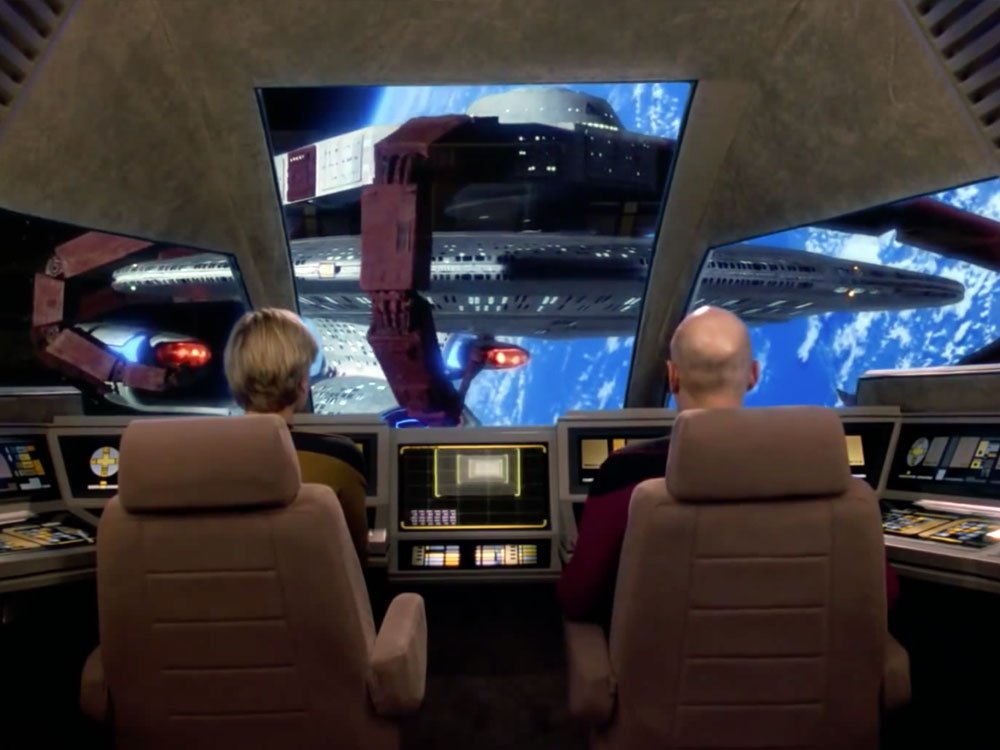
As the USS Enterprise-D embarked on its final voyage across the stars, Star Trek: The Next Generation Season 7 delivered a mixed bag of interstellar drama, philosophical quandaries, and a few truly head-scratching moments. For fans, these episodes didn't just play out on screen; they ignited countless Star Trek TNG Season 7 fan theories & discussions, dissecting every plot twist, character decision, and narrative choice, often for decades to come.
This isn't just a recap; it's an exploration of the deeper currents that made TNG's swan song a fertile ground for debate, speculation, and sometimes, affectionate exasperation. We're diving into the moments that stuck with us, the lingering questions, and the "what ifs" that define TNG's complex legacy.
At a Glance: Key Takeaways from TNG Season 7 Debates
- Mixed Reception: While the finale is universally praised, the season itself is often viewed as uneven, with highs like "Parallels" and "Lower Decks" alongside notorious lows such as "Sub Rosa" and "Masks."
- Unresolved Arcs & Missed Opportunities: Fans frequently lament storylines that felt dropped (e.g., the phase cloaking device from "The Pegasus," the "interface" tech from "Interface") or character developments that went nowhere (Picard/Beverly romance, Data's android family).
- The Prime Directive Under Scrutiny: Episodes like "Homeward" and "Journey's End" provided rich fodder for ethical debates, highlighting the Federation's core directive in morally complex scenarios.
- Maquis Genesis: Season 7 laid critical groundwork for the Maquis rebellion, seamlessly connecting TNG's narrative to Deep Space Nine's unfolding conflicts.
- The Power of the Finale: "All Good Things..." remains a masterclass in series conclusions, tying up loose ends while reinforcing TNG's optimistic vision for humanity's future.
Navigating the Final Frontier: Season 7's Narrative Trajectories
Season 7 often felt like a series of narrative experiments, some soaring successes, others crashing burns. Many episodes aimed for deeper character dives or explored complex ethical dilemmas, reflecting a show confident in its thematic reach. However, this ambition wasn't always matched by consistent execution, leading to significant fan discussions about what worked, what didn't, and why.
Let's break down the major discussions and theories, episode by episode and theme by theme.
Data's Emotional Quest and the Lore Dilemma (Descent, Part II)
The season kicks off with "Descent, Part II," attempting to resolve the cliffhanger from the previous season. The ground truth suggests a weak premise and conclusion for this Borg/Lore arc, saved primarily by Beverly's command performance and Data's final scenes with Geordi.
Fan Theories & Debates:
- Lore's True Intentions: Was Lore truly interested in Data's emotional development, or was it always about power and manipulation? Some fans theorize Lore genuinely wanted to "help" Data feel, but through his own twisted, superior android lens, believing emotion was weakness to be overcome by control.
- The Borg's Vulnerability: Lore's ability to take over the confused Borg after Hugh's return in "I, Borg" highlighted a weakness in the collective never truly explored again. Why couldn't others exploit this confusion? Could the Federation have turned the Borg against themselves more effectively using similar tactics?
- Data's Emotional Chips: Data's journey toward humanity was a cornerstone of TNG. His emotional chip in subsequent films became a major plot point. The Descent arc provided a taste of what unchecked, corrupted emotion might look like for Data, sparking discussions about the wisdom of him pursuing full emotion. Was his pure logic, tempered by curiosity, actually his greatest strength?
Geordi's Ghosts and Unused Tech: "Interface" and "Phantasms"
Geordi La Forge often found himself in the midst of personal challenges, and Season 7 offered two particularly notable examples: searching for his mother in "Interface" and dealing with his own subconscious in "Phantasms."
"Interface" is often cited as annoying, with the crew too quickly dismissing Geordi's plan, only for him to inadvertently save lives. The "interface" technology itself, allowing projection into another reality, is never seen again. This led to:
Fan Theories & Debates:
- The Federation's Technology Hoard: Why was such a powerful "interface" never used again? Was it deemed too dangerous, too resource-intensive, or simply forgotten for plot convenience? Many fans theorize that the Federation frequently develops advanced tech only to shelve it for ethical reasons or because writers simply didn't want to deal with its implications in future episodes. This aligns with a broader fan theory that the Federation "forgets" significant technological advancements to maintain narrative tension.
- Geordi's Undervalued Contributions: Some argue Geordi was consistently undervalued or sidelined despite his brilliance. His quick dismissal in "Interface" reinforced a perception among some fans that the crew didn't always trust his innovative solutions as readily as they might Picard's or Data's.
- The Warp Core Woes in "Phantasms": While described as "fun and hilarious," the repeated warp core failures in "Phantasms" raised questions. Was this a subtle hint at larger systemic issues with the Enterprise-D's aging systems, or simply a comedic plot device? Could it have been a precursor to the Enterprise-D's eventual destruction, hinting at underlying structural weaknesses?
Picard and Beverly: The Endless Dance ("Attached")
The romantic tension between Captain Picard and Dr. Beverly Crusher was a long-running thread throughout TNG. "Attached" brought this to a head, with their minds linked, forcing them to confront their unspoken feelings. The ground truth notes the convincing mind-reading scenes but finds Beverly's rejection annoying, worsening their romantic tension despite its realism.
Fan Theories & Debates:
- The "Will They/Won't They" Curse: Many fans believe the showrunners deliberately kept them apart, fearing that a definitive relationship would alter the dynamic too much. The "realistic" rejection in "Attached" only frustrated those hoping for a resolution, leading to theories that their romance was always intended to be a perpetual tease.
- Post-Series Relationship: After TNG, many fans speculate that Picard and Crusher eventually did get together, perhaps in the hiatus before the films or later in life (a theory somewhat validated by Star Trek: Picard). "Attached" serves as a key piece of evidence for the depth of their connection, even if they couldn't act on it then.
- The Mind-Meld's Lingering Effects: Did the profound experience of "Attached," where they shared every thought and feeling, fundamentally change their dynamic going forward, even if they didn't pursue romance? Some theorize it made their professional relationship even stronger, built on an unprecedented level of understanding.
The Federation's Moral Maze: Prime Directive, Treaties, and Rebellion
Season 7 delved deep into the complexities of Federation ethics, particularly regarding the Prime Directive and its implications.
- "Homeward": Prime Directive Dilemmas: Nikolai Rozhenko's decision to save a primitive culture from annihilation, but then impregnate a villager, sparked fervent debate. The ground truth supports saving lives but condemns the biological interference.
Fan Theories & Debates: Was Nikolai's act a necessary evil, or an unforgivable breach? Many argue that the Prime Directive, while noble, often leads to cold, detached observation in the face of suffering, making Nikolai's human (if flawed) intervention understandable, if not permissible. This episode is a touchstone for discussions on the Prime Directive's practical application versus its philosophical ideal. - "The Pegasus": Treaty Violations and Lost Tech: This episode explored the Federation's secret development of a phase cloaking device, violating the Treaty of Algeron. The ground truth notes concerns about the treaty's scope, the Federation abandoning such tech, and the Romulans' lenient reaction.
Fan Theories & Debates: - The Federation's Hypocrisy: Was it truly honorable for the Federation to abide by a treaty preventing defensive technology (cloaking) while other powers, like the Romulans, freely used it? This fueled discussions about the Federation's moral high ground and whether pragmatism should sometimes supersede idealistic treaties.
- The Missing Phase Cloak: The "missing" technology is a major point of contention. Why was such a powerful device never seen again? Fan theories range from it being too unstable, too resource-intensive, or simply the Federation choosing to bury the tech due to the ethical implications of its creation and the treaty violation. Some theorize that Section 31 (a later concept) might have secretly continued its development.
- Romulan Leniency: The relatively mild Romulan reaction to the treaty violation is often questioned. Was it a sign of their own internal political struggles, a strategic calculation, or a missed opportunity for the writers to create a bigger conflict?
- "Journey's End" & "Preemptive Strike": The Birth of the Maquis: These episodes are stellar examples of TNG tackling complex historical parallels (forcible displacement of Native Americans) and setting up future conflicts (the Maquis rebellion). The ground truth praises their historical parallels and significant implications.
Fan Theories & Debates: - Federation Complicity: "Journey's End" showed the Federation's dark side, forcing Picard to displace indigenous people. This sparked theories about the Federation's less-than-perfect expansionist policies, suggesting a hidden underbelly of colonial behavior, an uncomfortable truth for many fans.
- Ro Laren's Choice: Ro Laren's defection in "Preemptive Strike" is lauded as enticing and a great episode. Her decision to join the Maquis despite her Starfleet loyalties resonated deeply. Fans debated her motivations: was it pure principle, a sense of belonging with her own Bajoran heritage, or disillusionment with Starfleet's compromises? Her absence in future series (beyond a brief mention in Picard) left many wondering about her ultimate fate and wishing for her return. Could she have been a critical player in the Dominion War?
Standout Episodes and Fan Favorites
Despite the unevenness, Season 7 delivered some of TNG's most iconic and beloved episodes, sparking enduring discussions about their brilliance.
- "Gambit, Parts I & II": Praised for its intelligence, excitement, and Data as captain. The ground truth notes its slightly faltering "super god weapon" but praises the ending where discipline defeats it.
Fan Theories & Debates: - Picard's Undercover Prowess: Picard's ability to seamlessly blend into a smuggler crew solidified his "action captain" image, leading to theories about his lost youth before Starfleet, or hidden talents we rarely saw.
- The Psionic Resonator's True Power: While rendered useless by a disciplined mind, the initial concept of a "super god weapon" was terrifying. Could it have been reverse-engineered or adapted to be effective against less disciplined foes? Its potential for misuse was a common talking point.
- "Parallels": A Multiverse Masterpiece: This episode is a classic, described as a "gem" for its incredible number of continuities and Worf's defiance.
Fan Theories & Debates: - The Infinite Universes: "Parallels" opened the door wide to the multiverse concept, predating much of its mainstream popularity. How many parallel Enterprises are there? What other versions of the crew exist? This episode remains a goldmine for fan fiction and "what if" scenarios across countless timelines.
- Worf's Unique Resistance: Worf's ability to recognize the timeline shifts before anyone else often leads to theories about his Klingon physiology, his strong sense of identity, or even a latent psychic sensitivity as a reason for his resilience.
- Timeline Stability: Could there have been lingering effects from Worf's journey through so many realities? Did pieces of other timelines ever subtly bleed into the prime one?
- "Lower Decks": A New Perspective: This classic offers a look at junior officers, blending their personal stories with a spy plot. The ending is tragic and touching, and the ground truth expresses regret that these characters aren't seen again.
Fan Theories & Debates: - The Realities of Starfleet Life: "Lower Decks" grounded the TNG universe, showing the challenges and aspirations of everyday Starfleet personnel. It humanized the vast organization, leading to discussions about the unsung heroes of Starfleet.
- Lost Potential: The tragic end for some junior officers and the absence of most of them in future episodes left fans wishing for more stories from this perspective. What happened to Ensign Taurik? What other challenges did Nurse Ogawa face? (Her character did continue to appear, but the others did not). The desire for "everyday Trek" would later be somewhat fulfilled by Lower Decks (the animated series), which often references this pivotal TNG episode.
The Head-Scratchers: Episodes That Missed the Mark
Not every bold experiment landed. Season 7 also features episodes that are widely considered "stinkers," challenging fan loyalty and sparking exasperated discussions.
- "Sub Rosa": The infamous Ghost Story: Described as "severely boring" and a "cheap ghost story," "Sub Rosa" is often singled out as one of TNG's weakest episodes. The ground truth criticizes its clichés and Beverly's out-of-character behavior.
Fan Theories & Debates: - Beverly's Brain Fog: Fans often theorize that Beverly must have been under some kind of psychological influence or "space madness" to consider quitting Starfleet for a ghost. It's difficult to reconcile her intelligence and dedication with the choices she makes in this episode.
- The Un-Trek Episode: Many discussions revolve around how "Sub Rosa" fundamentally misunderstands the core tenets of Star Trek, favoring a gothic romance over scientific or philosophical exploration. Was it an attempt to capture a broader audience, or a creative misstep by writers unfamiliar with the show's tone?
- "Masks": A Wasted Opportunity: This episode, where Data channels ancient cultures, is criticized for wasting Brent Spiner's talent on a silly plot that goes nowhere.
Fan Theories & Debates: - Data's Sentience vs. Programming: If Data could embody these ancient personalities so fully, does it imply his positronic brain has hidden depths capable of total personality assimilation, or was it a form of sophisticated mimicry? This episode often sparked debates about the limits of Data's artificial sentience.
- The Meaning of the Artifacts: Picard's fascination with ancient cultures was a redeeming quality, but the lack of a deeper point to the artifacts themselves frustrated fans. What was the true history of the Masked Ones? Was their culture genuinely resurrected, or merely replayed by Data?
- "Force of Nature": The Warp Speed Paradox: The idea that warp drive destroys the universe, leading to an ignored warp speed limit, is deemed ridiculous and problematic by the ground truth.
Fan Theories & Debates: - The Forgotten Rule: The "warp speed limit" introduced in this episode is largely forgotten in subsequent Star Trek series, creating a huge continuity problem. Fans often theorize that a solution was found off-screen, that the problem only applies to specific warp factors, or that the Federation simply ignored it (a darker theory implying Starfleet prioritizes exploration over environmental safety).
- Universal Implications: If warp drive truly destroyed spacetime, then all warp-capable civilizations (Klingons, Romulans, Ferengi, etc.) would be contributing to this destruction. Why was it only the Federation's responsibility to adhere to a limit? This episode remains a sore point for its scientific implausibility and poor resolution.
The Grand Finale: "All Good Things..." and Lasting Impressions
The two-part series finale is widely regarded as one of the best in television history, praised for its excitement, character resolutions, and grand themes. The ground truth highlights Troi and Worf's relationship, Picard's past, Tasha's return, Q's guidance, and the camaraderie of the poker game.
Fan Theories & Debates:
- Q's True Role: "All Good Things..." solidified Q's role not just as an antagonist, but as a benevolent (if mischievous) guide for humanity. Fans debate whether Q genuinely cares for Picard and humanity, or if his "tests" are merely entertainment that accidentally benefit humanity. The ending suggests a deeper, almost paternal bond.
- The Future Timeline's Fate: While Picard averts the anti-time anomaly, the future timeline he experiences remains a source of fascination. Did that future exist as a possibility? Could elements of it still come to pass? The broken relationship between Picard and Riker, the fractured Federation, and Worf's governorship of a Klingon colony are all intriguing "what ifs."
- The Poker Game: The final poker game, with Picard finally joining his senior staff, is considered a perfect ending. It symbolizes Picard's growth from a somewhat detached captain to a true member of a family. This scene often sparks discussions about the subtle character arcs that defined TNG, culminating in this intimate moment.
- Humanity's Evolution: The finale's grand point about humanity's collective mind expanding reinforced TNG's optimistic vision. This encouraged fans to consider the potential of humanity beyond the series, cementing the show's positive legacy.
Addressing Common Fan Questions and Misconceptions
Throughout decades of discussion, certain questions about TNG Season 7 frequently arise.
Q: Was Season 7 rushed or did it genuinely decline in quality?
A: The general consensus (supported by the ground truth) is that Season 7 had a noticeable decline in consistency. While there were brilliant episodes, many felt like filler or had underdeveloped plots, suggesting a combination of creative fatigue, a focus on setting up the movies, and possibly less oversight as the series neared its end. "Sub Rosa" and "Masks" are frequently cited as evidence of this decline.
Q: Why were so many promising technologies (like the phase cloaking device or the "interface") never seen again?
A: This is a common frustration across Star Trek. Fan theories suggest a few reasons:
- Narrative Convenience: Introducing super-powerful tech can complicate future plots, so writers often "forget" them.
- Ethical Concerns: The Federation might deem certain technologies too dangerous or morally ambiguous for widespread use (as with the Pegasus cloaking device).
- Technological Limitations: Some tech might be experimental, unstable, or too resource-intensive for practical deployment.
Q: Did the Picard/Beverly romance ever get a proper resolution?
A: On TNG, not really. "Attached" brought their feelings to the surface but ended in rejection, maintaining the "will they/won't they" dynamic. While Star Trek: Picard later addressed and evolved their relationship, within the context of TNG and the subsequent films, it remained largely unresolved, a source of both frustration and fascination for fans.
Q: How much did Season 7 set up Deep Space Nine and Voyager?
A: Season 7 significantly influenced Deep Space Nine, particularly with the Maquis storyline ("Journey's End," "Preemptive Strike"). Ro Laren's defection and the implications of the demilitarized zone were direct precursors to major DS9 plots. It didn't directly set up Voyager in the same way, but it continued to flesh out the larger Federation universe, its allies, and its enemies, which provided context for future series.
Beyond the Screen: The Enduring Legacy of TNG Season 7 Discussions
While TNG Season 7 might be remembered for its unevenness, its true legacy lies in the vibrant discussions it continues to inspire. Every weak plot point becomes a hypothetical "fan fix," every unanswered question a prompt for new theories, and every character choice a lens for deeper psychological analysis.
The act of dissecting these episodes, celebrating the triumphs, and critiquing the missteps, isn't just about nostalgia. It's about engagement, about investing in a universe and its characters so deeply that their fictional lives prompt real-world conversations about ethics, technology, and the human condition.
As you revisit Star Trek TNG Season 7, whether for the first time or the tenth, don't just watch. Think about the choices made, the paths not taken, and the countless stories bubbling beneath the surface. It's in these discussions, in the collective imagination of the fans, that the final season of The Next Generation truly continues to live long and prosper.