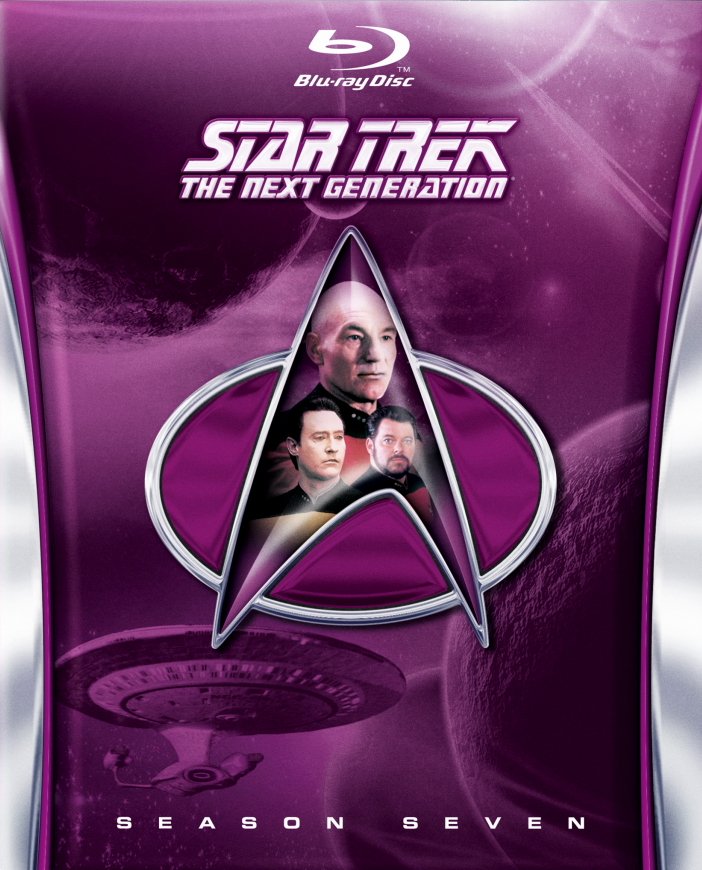
The final frontier, it turned out, wasn't just "space" for the crew of the USS Enterprise-D, but the bittersweet closure of an extraordinary journey. When Star Trek: The Next Generation aired its seventh and final season, it wasn't merely concluding a TV show; it was ending a cultural phenomenon that had redefined science fiction for a new generation. Delving into Star Trek TNG Season 7 Critical Reception & Legacy reveals a period of intense fan scrutiny, poignant storytelling, and a definitive end that shaped everything that followed.
This wasn't just another season; it was the last dance, and the weight of seven years of character development, complex themes, and evolving narratives rested on its shoulders. How did it fare under such pressure, and what reverberations did its conclusion send through the vast Star Trek universe and beyond?
At a Glance: TNG's Final Voyage
- Broadcast Dates: September 20, 1993 – May 23, 1994, comprising 26 episodes.
- Core Themes: Deep dives into family history, personal legacies, untold secrets, and Picard's evolving relationship with time and humanity.
- Critical Highs: Celebrated for its ambitious finale, "All Good Things...", and episodes like "The Pegasus" and "Lower Decks."
- Notable Lows: Some episodes, like "Sub Rosa" and "Masks," often cited as weaker entries.
- Awards Recognition: Nominated for a Primetime Emmy Award for Outstanding Drama Series, a historic first for a syndicated series.
- Lasting Impact: Set the stage for the TNG films, influenced subsequent Star Trek series, and solidified the show's place as a benchmark for serialized science fiction.
The Weight of Expectation: Approaching the Final Frontier
Imagine the anticipation in late 1993. Star Trek: The Next Generation had spent six years building an unparalleled universe, refining its characters, and consistently pushing the boundaries of syndicated television. Fans knew Season 7 would be the last, and with that knowledge came a heightened sense of expectation, trepidation, and a desire for a fitting farewell. This wasn't just about plot resolution; it was about honoring the immense emotional investment viewers had made in Captain Picard, Data, Riker, Worf, Geordi, Troi, and Dr. Crusher.
The season kicked off on September 20, 1993, and concluded with a monumental two-part finale on May 23, 1994, delivering 26 episodes that navigated the tricky waters of concluding a beloved series while still telling compelling, standalone stories. The challenge was immense: satisfy existing fans, introduce new complexities, and neatly (or thoughtfully) tie up loose ends, all while preparing the crew for their next adventure on the big screen.
Themes That Defined the Farewell Tour
Season 7 largely embraced a more introspective and character-driven approach, a natural evolution for a show nearing its conclusion. The overarching theme, as noted by sources like Wikipedia, was a deep exploration of "family history" – both literal and metaphorical. This wasn't just about blood relatives but the bonds forged on the Enterprise, the legacies inherited, and the personal truths that shaped each crew member.
- Confronting Personal Demons and Family Legacies:
- Data's Roots: The season opened with the conclusion of the Lore arc, but Data's journey into his origins didn't stop there. "Inheritance" saw him confront the startling realization that his "mother," Dr. Julianna Tainer, was still alive, forcing him to grapple with the complexities of his own creation and identity. This episode underscored Data's ongoing quest for humanity through the lens of family connection.
- Geordi's Loss: In "Interface," Geordi La Forge faced a personal crisis when he attempted to save his mother from a damaged ship, only to be forced to confront the painful reality of loss. These episodes delved into the deep emotional wellsprings of characters often seen as more stoic or cerebral.
- Worf's Heritage: The Klingon warrior's complex family dynamics resurfaced powerfully. "Firstborn" introduced a future version of his son, Alexander, presenting Worf with a different path for his progeny, while "Homeward" brought his foster brother, Nikolai Rozhenko, back into his life, further exploring Worf's divided loyalties between Klingon tradition and Starfleet ideals.
- Unearthing Hidden Truths:
- Troi's Psychic Scars: "Dark Page" offered a rare look into Deanna Troi's hidden past, revealing a traumatic childhood event involving her deceased sister, Kestra. This episode allowed Troi, often portrayed as the empathetic anchor, to become the focus of a deeply personal, psychological drama.
- Crusher's Ancestry: Dr. Beverly Crusher found herself entangled in a gothic romance and family secret in "Sub Rosa," an episode that, while divisive, undeniably explored her lineage and a side of her character rarely seen.
- Picard's Ultimate Trial:
- Unexpected Paternity: "Bloodlines" introduced Jason Vigo, a young man who claimed to be Picard's son, forcing the captain to confront a future he never imagined. This offered a fascinating glimpse into Picard's potential legacy beyond the Enterprise.
- The Nexus of Time: The series finale, "All Good Things...," stands as a monumental achievement, bringing Picard's personal journey full circle. Q, humanity's cosmic judge, returned to conclude his trial, giving Picard the unique opportunity to navigate three distinct timelines – past, present, and future – to save all of humankind. This episode was not just a plot device; it was a profound meditation on memory, choice, destiny, and Picard's evolving understanding of humanity's place in the universe. It reinforced the notion that "all good things must come to an end," but also that the journey itself is the reward.
These thematic threads wove together to create a season rich in character development, reflecting the show's maturation over seven years.
Critical Reception: A Mixed Bag, But Mostly Fond
The critical reception for Star Trek: The Next Generation Season 7 was, much like many long-running shows in their final year, a tapestry of highs and lows. While some episodes were less acclaimed, the season as a whole was largely praised for its commitment to character and, most notably, for delivering one of television's most satisfying series finales.
The show's consistent quality over its run certainly earned it a strong reputation. While a single Metacritic score for Season 7 isn't readily available, the series as a whole is critically well-regarded. The overarching sentiment among critics and fans was that while individual episodes might have varied in quality, the creative team largely succeeded in bringing the saga to a meaningful close.
The Highs: Standing Tall
Several episodes from Season 7 are consistently cited as among the best not just of the season, but of the entire series:
- "All Good Things..." (Parts 1 & 2): Unquestionably the crown jewel of Season 7 and a benchmark for series finales. Critics lauded its ambitious scope, emotional depth, and ability to weave together disparate timelines into a coherent, moving narrative. It paid homage to the series' roots, including Picard's first encounter with Q, while propelling the characters and themes towards a mature, optimistic conclusion. The final poker game scene remains one of the most iconic and beloved moments in Star Trek history.
- "The Pegasus": This gripping episode saw Riker confront his past when a legendary Starfleet captain, Admiral Pressman, returned. The story delved into ethical dilemmas surrounding cloaking device development and the Prime Directive, reminding viewers of TNG's capacity for complex moral storytelling.
- "Lower Decks": A fan favorite for its unique perspective, this episode focused on the lives of four junior officers awaiting promotion. It offered a refreshing look at the Enterprise-D from the bottom up, showing the daily struggles, aspirations, and camaraderie of those not on the main bridge crew, all while building suspense around a mysterious mission.
- "Preemptive Strike": The season's penultimate episode, "Preemptive Strike," was a powerful exploration of loyalties and difficult choices. Ro Laren's undercover mission with the Maquis forced her to choose between her Starfleet duty and her principles, ending with her defection. It was a poignant and morally ambiguous character piece that served as a direct lead-in to themes explored in Deep Space Nine.
The Lows: Navigating Treacherous Waters
Even in a strong season, not every episode can be a masterpiece. Season 7 had its share of less-than-stellar entries, often becoming talking points for fans and critics:
- "Sub Rosa": Frequently cited as one of the weakest episodes of the entire series, "Sub Rosa" saw Dr. Crusher fall under the spell of a ghost-like entity in a gothic, romantic setting. Critics often panned its jarring tone, lack of scientific rigor (even by Trek standards), and departure from typical TNG storytelling.
- "Masks": Another episode that often draws criticism, "Masks" revolved around Data being taken over by an ancient alien civilization's personality, causing the Enterprise to transform. While ambitious in concept, its execution was often seen as confusing, slow, and overly reliant on Data's physical mimicry.
Despite these occasional missteps, the overall critical consensus remained positive, buoyed by the season's thematic richness and, crucially, its masterful finale. The show's strength was not just in avoiding bad episodes, but in its ability to consistently deliver thought-provoking science fiction, even as it approached its conclusion. For more details on the series' journey, you can Explore Star Trek TNG Season 7 through its full run.
The Enduring Legacy of TNG's Final Season
The impact of Star Trek: The Next Generation Season 7 extends far beyond its initial broadcast. It didn't just end a television show; it solidified a legacy and set the stage for the franchise's future.
Setting the Stage for the TNG Films
The immediate legacy of Season 7 was its direct lead-in to the TNG movies. "All Good Things..." was not just a series finale, but a powerful bridge to Star Trek Generations, the first feature film starring the TNG crew, released just a few months later. The season expertly transitioned the characters from the weekly episodic format to the grander canvas of cinema, ensuring that audiences were eager to see their favorite Starfleet officers continue their adventures on the big screen. The character arcs, relationships, and thematic explorations of Season 7 provided a solid foundation for the subsequent films.
Influencing the Star Trek Canon
Season 7's thematic explorations and character developments had a profound influence on subsequent Star Trek series. Ro Laren's defection in "Preemptive Strike" was a direct narrative thread that enriched Star Trek: Deep Space Nine's exploration of the Maquis conflict and the morally gray areas of the Federation's expansion. The nuanced character studies and exploration of "found family" dynamics continued to resonate in shows like Voyager and even modern Trek iterations, demonstrating TNG's final season's continued thematic relevance.
A Benchmark for Syndicated Drama
Perhaps one of the most significant and often overlooked legacies of Season 7 is its historic critical recognition. As Wikipedia notes, Star Trek: The Next Generation was nominated for a Primetime Emmy Award for Outstanding Drama Series, making it the first – and, as of 2020, only – syndicated series to ever receive this prestigious nomination. This wasn't just an award nod; it was a powerful validation of the show's artistic merit, proving that high-quality, thought-provoking drama could thrive outside of network television. It opened doors and challenged perceptions about what syndicated programming could achieve.
Solidifying Character Arcs and Fan Connection
The final season allowed for definitive character closures, even as new journeys awaited. Picard's acceptance of humanity's potential, Data's continued quest for understanding, Worf's balance between two worlds, and the enduring camaraderie of the bridge crew were all cemented. These final portrayals left a lasting impression on fans, making the characters feel complete and beloved even as they departed the weekly screen. The emotional farewell in "All Good Things..." ensured that audiences felt a profound sense of satisfaction and closure, cementing TNG's reputation for understanding its audience.
Common Criticisms & Retrospective Re-evaluation
With the benefit of hindsight, how does Star Trek TNG Season 7 Critical Reception & Legacy hold up? While the finale is universally praised, retrospective views often acknowledge a slight unevenness in the season's middle episodes.
The "Dip in Quality" Argument
Some critics and fans argue that Season 7, while strong, experienced a minor dip in overall quality compared to the acclaimed Seasons 3-6. Episodes like "Sub Rosa" and "Masks" are frequently trotted out as examples of misfires, suggesting that the creative team might have been stretched thin, or perhaps experimenting a little too much as the end drew near.
However, this perceived "dip" is often contextualized. Even an average TNG episode was often far superior to the best of many other sci-fi shows of the era. The production pressures of a 26-episode season, alongside the burgeoning development of Deep Space Nine and the imminent TNG films, likely contributed to some episodes feeling less polished or ambitious.
Re-evaluating the "Weaker" Entries
In a retrospective light, even the less popular episodes can offer valuable insights. "Sub Rosa," while an outlier in its genre, did give Dr. Crusher a unique (if odd) personal story. "Masks," despite its flaws, was an ambitious attempt to tell a visually distinct story and explore the nature of cultural memory. These episodes, while not universally loved, show a willingness to take risks, a hallmark of TNG's creative spirit. They also serve as a useful counterpoint to highlight just how consistently excellent the show often was.
Beyond the Screen: TNG Season 7's Cultural Footprint
The conclusion of Star Trek: The Next Generation was more than just the end of a television show; it was a significant cultural event that left an indelible mark on television history and popular culture.
In the Pantheon of Great TV Endings
"All Good Things..." is consistently ranked among the greatest series finales of all time. It provided closure without being final, offering a sense of hope and continuation rather than a definitive stop. This approach influenced how many subsequent shows aimed to end their runs, emphasizing character journey and thematic resonance over simple plot resolution. It taught future showrunners that a great ending can elevate an entire series, rather than diminish it.
Shaping the Star Trek Fandom
The discussions, debates, and fan theories generated by Season 7, particularly the finale, continue to shape the Star Trek fandom. Conventions, online forums, and fan-created content regularly revisit the themes, episodes, and character arcs of the final season. It cemented the bond between the audience and the Enterprise crew, ensuring their adventures would live on through rewatches, analysis, and new interpretations. The shared experience of TNG's ending created a powerful communal memory that resonates decades later.
Charting Your Own Course: Re-experiencing Season 7
For both long-time fans and new viewers exploring the series, re-watching Star Trek: The Next Generation Season 7 offers a unique and rewarding experience. Here's how to approach it with a fresh perspective:
- Focus on the Character Arcs: Pay close attention to how each main character's personal journey culminates or transitions. From Data's continued quest for humanity to Picard's evolving understanding of time and connection, the season is a masterclass in character development.
- Embrace the Thematic Depth: Beyond the sci-fi plots, look for the underlying themes of family, legacy, loss, and the nature of existence. These deeper layers are what make the season so rich and enduring.
- Appreciate the Risks: Even with episodes often cited as weaker, consider the ambition behind them. TNG always tried to tell unique stories, and sometimes that meant venturing into unconventional territory.
- The Power of the Finale: Watch "All Good Things..." not just as a conclusion, but as a celebratory meditation on the entire series. It's a testament to the show's core values and its hopeful vision of humanity's future. The ending shot, with Picard finally joining his senior staff at the poker table, signifies a deep, personal connection that transcends rank and duty – the true heart of TNG.
Ultimately, Star Trek TNG Season 7 Critical Reception & Legacy stands as a testament to a show that knew how to end well. It delivered emotional farewells, intellectual challenges, and a grand conclusion that solidified its place not just in Star Trek history, but in the broader pantheon of great television. It may have been the end of an era, but it was also a powerful affirmation of everything that made The Next Generation so beloved.